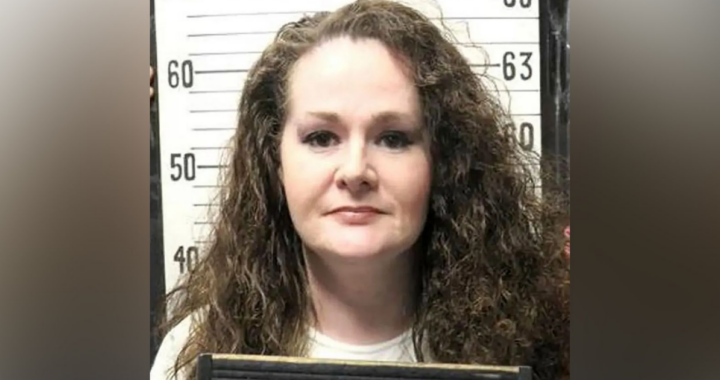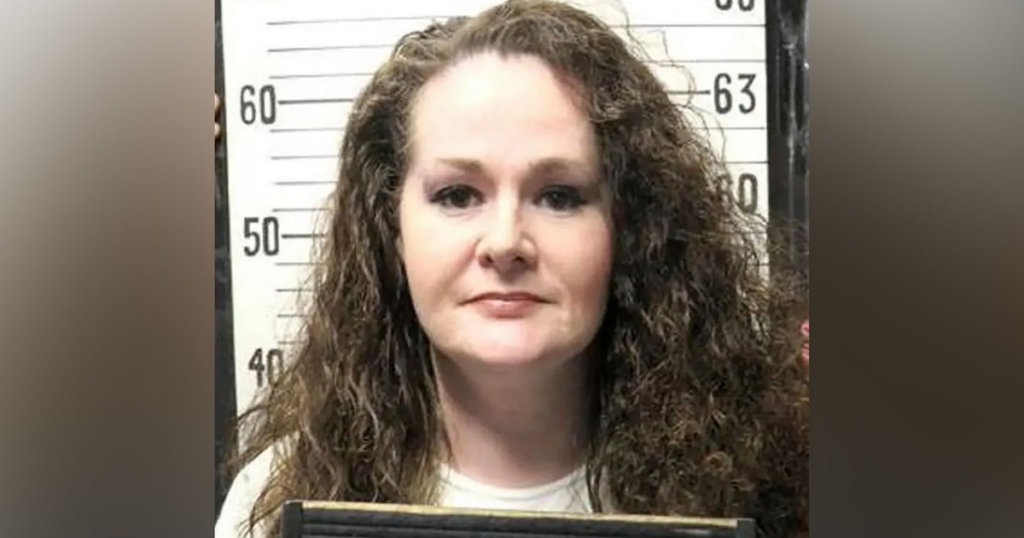
A disturbing photograph reportedly showing injuries suffered by death row inmate Christa Pike during her failed execution has been leaked from inside the Tennessee prison system.
The image is said to show severe discolouration and damage to Pike’s arm following the botched attempt to execute her by lethal injection on September 30.
The photograph has not been made public and its authenticity has not been independently verified.
However, its reported contents appear consistent with injuries described by Pike’s lawyers in court documents following the failed execution.
They said both of the 50-year-old’s arms were “swollen, burned, and blistered” when she arrived at hospital.
Pike remains critically ill following the execution attempt and, according to her attorney, has not regained consciousness.
She is intubated and being kept on a ventilator while receiving treatment at a Nashville-area hospital.
The newly reported photograph is claimed to have originated from within the Tennessee Department of Correction.
RadarOnline, which first reported details of the image, said it had chosen not to publish it.
Reports describe Pike’s arm as purple and severely damaged from around the elbow down.
There has been no official confirmation from the Tennessee Department of Correction that the photograph is genuine or that it came from a member of prison staff.
But Pike’s injuries themselves are documented in a court filing submitted by her legal team.
Her attorneys said she arrived at hospital with extensive swelling, burns and blistering to both arms after receiving two rounds of pentobarbital during the state’s unsuccessful attempt to put her to death.
Exactly what happened to the drug once it was administered has become one of the central questions surrounding the failed execution.
Pike’s lawyers allege that the intravenous lines were not correctly positioned and that some or all of the pentobarbital entered surrounding tissue instead of flowing properly into her bloodstream.
Anaesthesiologist Dr Joel Zivot, who has advised Pike’s legal team, has said the evidence is consistent with a vein rupturing and the drug entering tissue beneath the skin.
That process is known as extravasation.
Pike’s legal team alleges that members of the execution team failed to recognise that the IV lines were not functioning correctly.
The state has not accepted those allegations.
The Tennessee Department of Correction said immediately after the failed execution that staff had followed every step of the state’s established protocol.
It said the lethal injection chemical had previously been effective and that the protocol did not permit additional procedures beyond those undertaken that evening.
Questions about Pike’s IV access had been raised months before her scheduled execution.
Her attorneys warned that she had small veins and thrombocytosis, a condition involving an abnormally high number of platelets in the blood.
They argued that her medical circumstances could make establishing and maintaining intravenous access more difficult.
Those concerns became increasingly significant once the execution began.
Witnesses said prison staff spent a prolonged period attempting to establish IV access before Pike was presented to the media witnesses.
Her lawyers have claimed numerous attempts were made to insert needles into her arms.
At one stage, Pike herself reportedly attempted to direct the execution team towards veins they could use.
Her attorneys subsequently alleged that one needle was bent at approximately a 90-degree angle when it was removed following an unsuccessful attempt.
Once the lethal injection process began, Pike remained conscious and able to speak.
At 7.34pm, she made a complaint that has since become central to questions about what was happening inside her arm.
“My arm feels like it’s about to burst open,” Pike said, according to a media witness.
She also complained about throbbing and burning around the injection site.
Witnesses said she continued moving and making sounds after the drug had been administered.
At one point, Pike lifted her head and looked towards the IV.
The curtain separating the execution chamber from witnesses was closed at 7.46pm.
It reopened several minutes later.
Pike was still alive.
Witnesses described hearing increasingly loud breathing and snoring as the execution continued.
The curtain was eventually closed again at around 8.05pm.
For almost another hour, witnesses could still hear Pike breathing from inside the chamber.
The microphone was eventually switched off and members of the media were ordered to leave.
Pike had been administered two rounds of pentobarbital but had not died.
She was subsequently transported to an outside medical facility.
The Tennessee Department of Correction confirmed later that night that Pike had been taken for medical treatment.
Her lawyers have since provided a much more serious picture of her condition.
A court filing said she was unconscious, intubated and dependent on a ventilator.
It said hospital staff were attempting to save her life and clear the pentobarbital from her system.
Both arms were described as swollen, burned and blistered.
Her attorney Stephen Ferrell has since said Pike has not regained consciousness and may never fully recover.
The reported leaked photograph potentially provides the first visual evidence of the injuries described by her legal team.
But because the picture has not been published or officially authenticated, claims about exactly what it shows remain impossible to independently verify.
Pike’s attorneys are now seeking to ensure that evidence surrounding the failed execution is preserved.
They filed an emergency motion requesting that records and other material connected with the execution attempt be protected while what happened is investigated.
The consequences have already reached the highest levels of Tennessee’s government.
Governor Bill Lee has suspended executions in the state for the remainder of 2026 and ordered an independent review of Pike’s failed execution.
The state’s correction commissioner, Frank Strada, has also resigned.
The investigation is expected to examine the execution procedure and how a woman given two rounds of a drug intended to kill her survived and was instead taken to hospital in critical condition.
Pike had been sentenced to death for the 1995 murder of 19-year-old Colleen Slemmer.
She was 18 when Slemmer, a fellow student at the Knoxville Job Corps programme, was lured to an isolated area and brutally attacked.
Pike was convicted of murder and sentenced to death in 1996.
She has never denied her involvement in Slemmer’s killing.
Her execution on September 30 would have made her the first woman put to death by Tennessee in more than two centuries.
Instead, the attempt ended with Pike being rushed from the prison to hospital.
Her future is now uncertain.
Ferrell has said the extent of any permanent injuries is not yet known, while medical questions remain over the effects of the large amount of pentobarbital administered during the procedure.
There is also the question of whether Tennessee could attempt to execute Pike again if she survives.
Her lawyers are seeking to have her death sentence commuted to life imprisonment and have argued that subjecting her to another execution attempt would raise serious constitutional issues.
For now, Pike remains in hospital under guard.
The photograph reportedly showing her damaged arm has added another potential piece of evidence to the investigation into what happened on September 30.
Its authenticity has yet to be established publicly.
But the injuries it is claimed to show are consistent with those already documented by Pike’s attorneys: extensive swelling, burning and blistering to both arms following an execution that was supposed to end her life.
Instead, Pike survived – and investigators must now determine why.